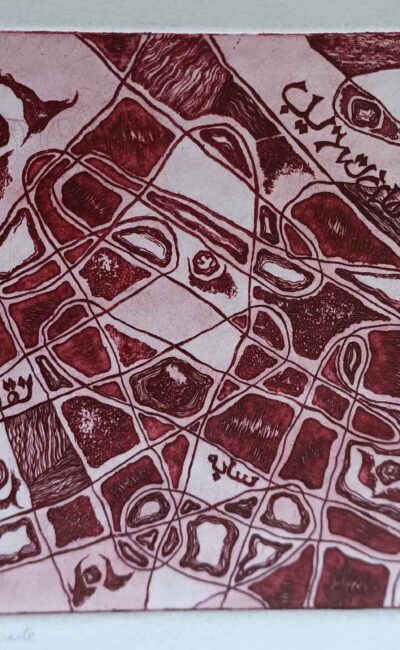
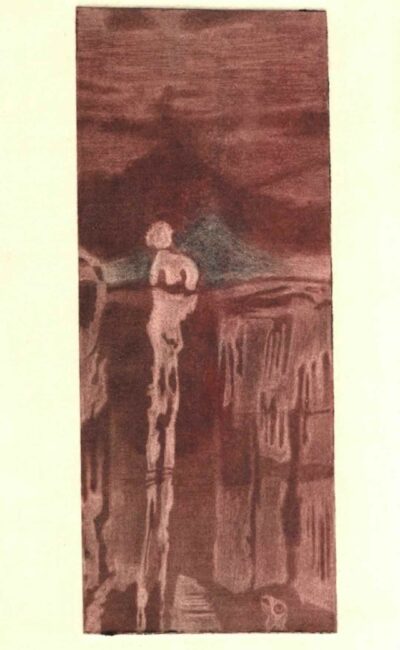
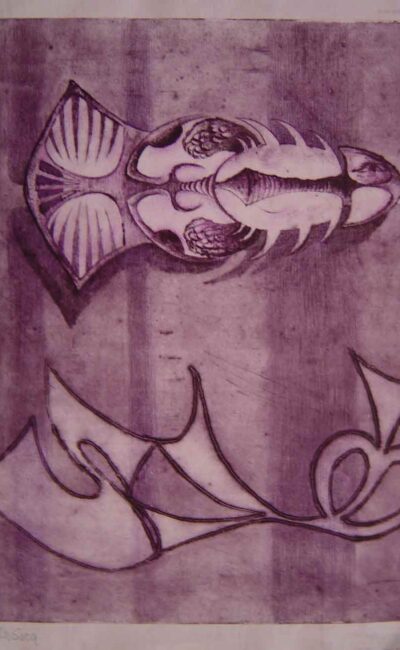
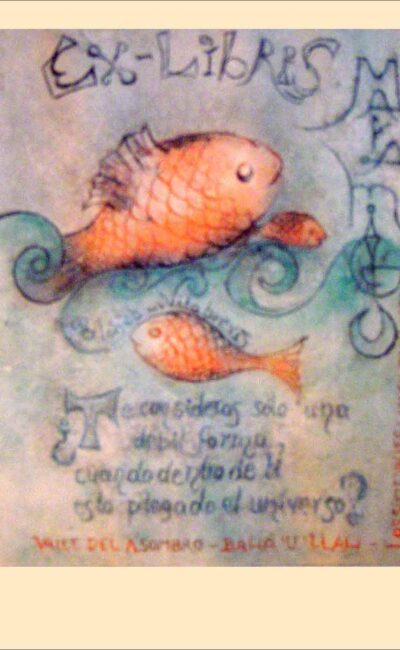
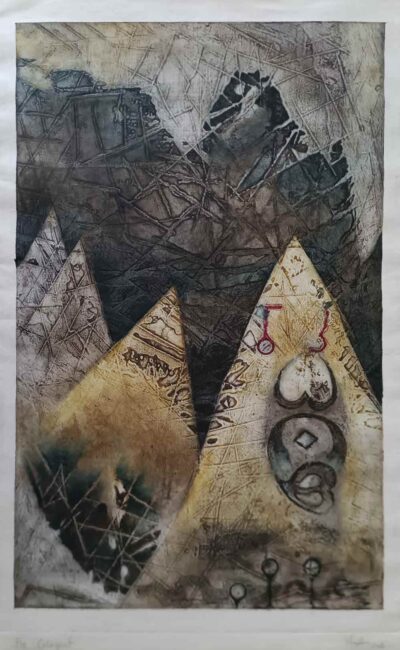
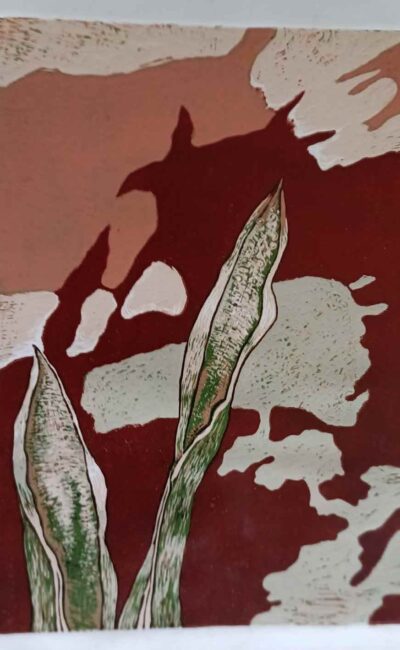
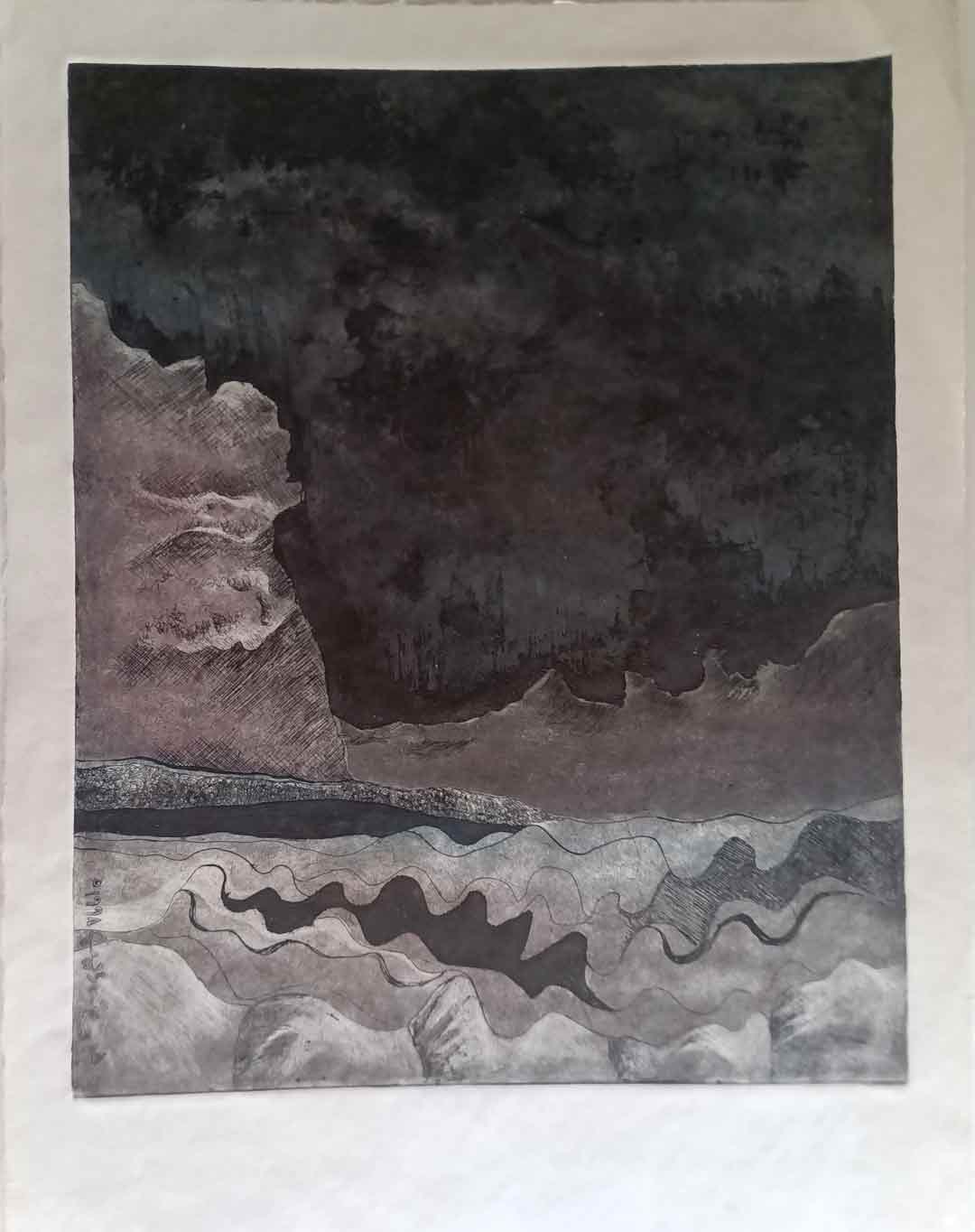
Etching
Printmaking is an artistic technique that involves drawing or carving an image onto a rigid surface, known as a matrix, and then transferring that image onto another surface, usually paper, through a printing process. It is one of the oldest forms of image reproduction.
Main characteristics of printmaking:
Matrix: can be made of metal (such as copper or zinc), wood, linoleum, stone, or even synthetic materials.
Inking: ink is applied to the worked matrix.
Printing: the image is transferred to paper by pressure, using a press or manually.
Multiplicity: allows for multiple copies of the same design, called prints or impressions.
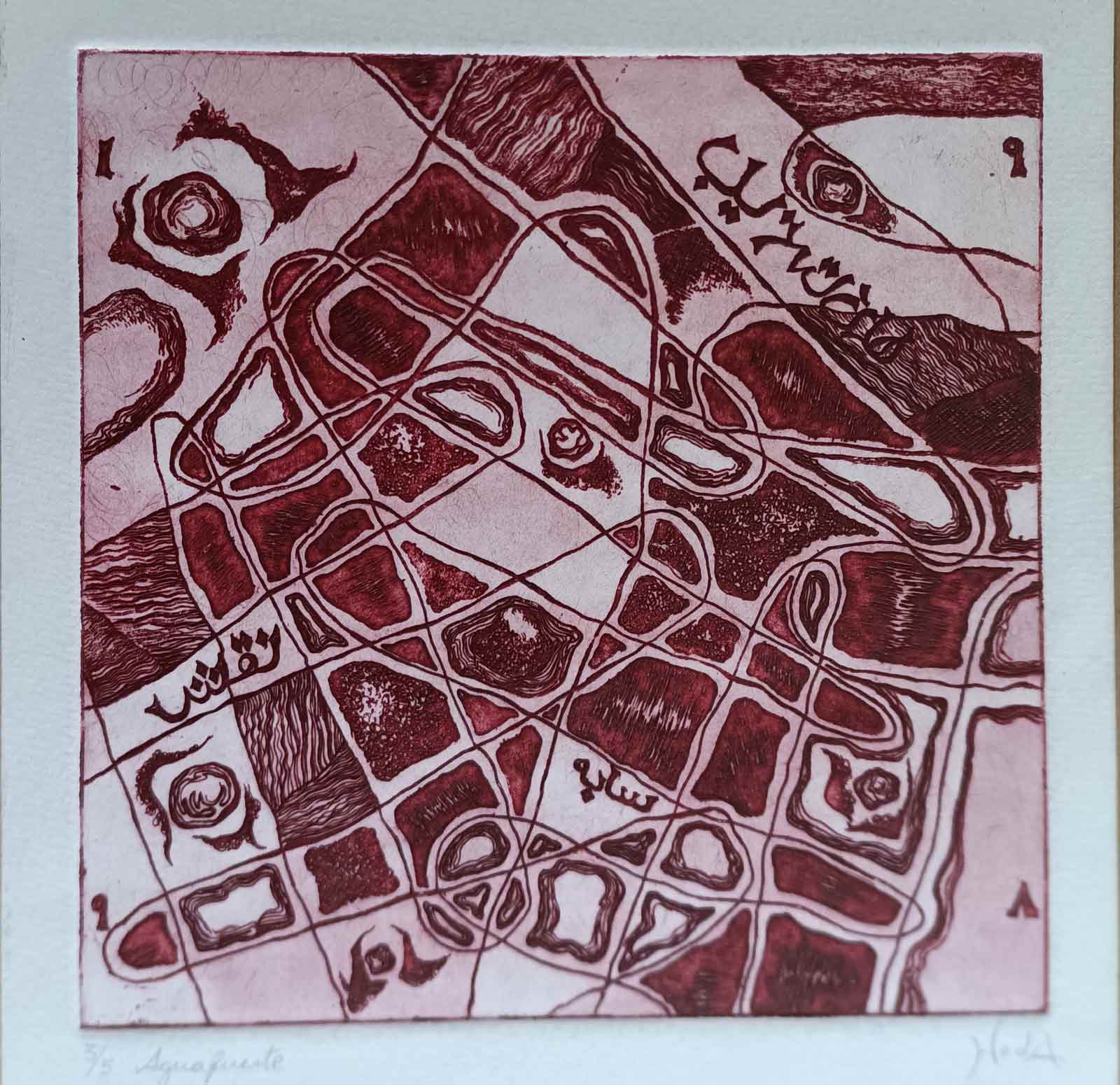
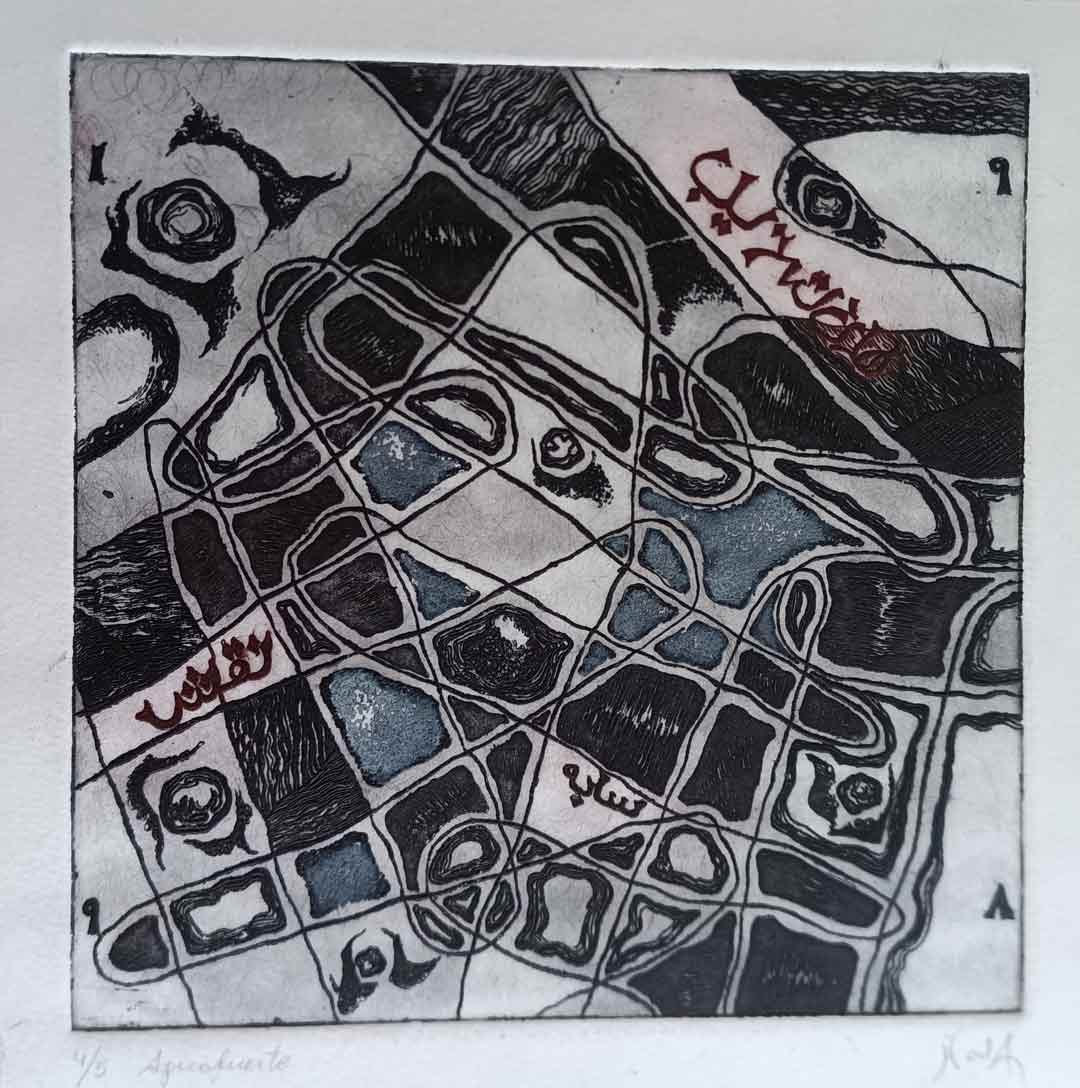
Etching is an intaglio printmaking technique in which acid is used to corrode or engrave an image onto a metal plate, usually copper, zinc, or steel. First, the plate is coated with an acid-resistant protective layer called a ground or varnish. Then, the artist draws the design directly onto this layer with a sharp tool, exposing the metal in the desired areas.
Next, the plate is submerged in an acid bath that corrodes only the exposed metal areas, creating grooves that will hold the ink. Finally, the protective layer is removed, the plate is inked, and the image is printed onto paper using pressure.
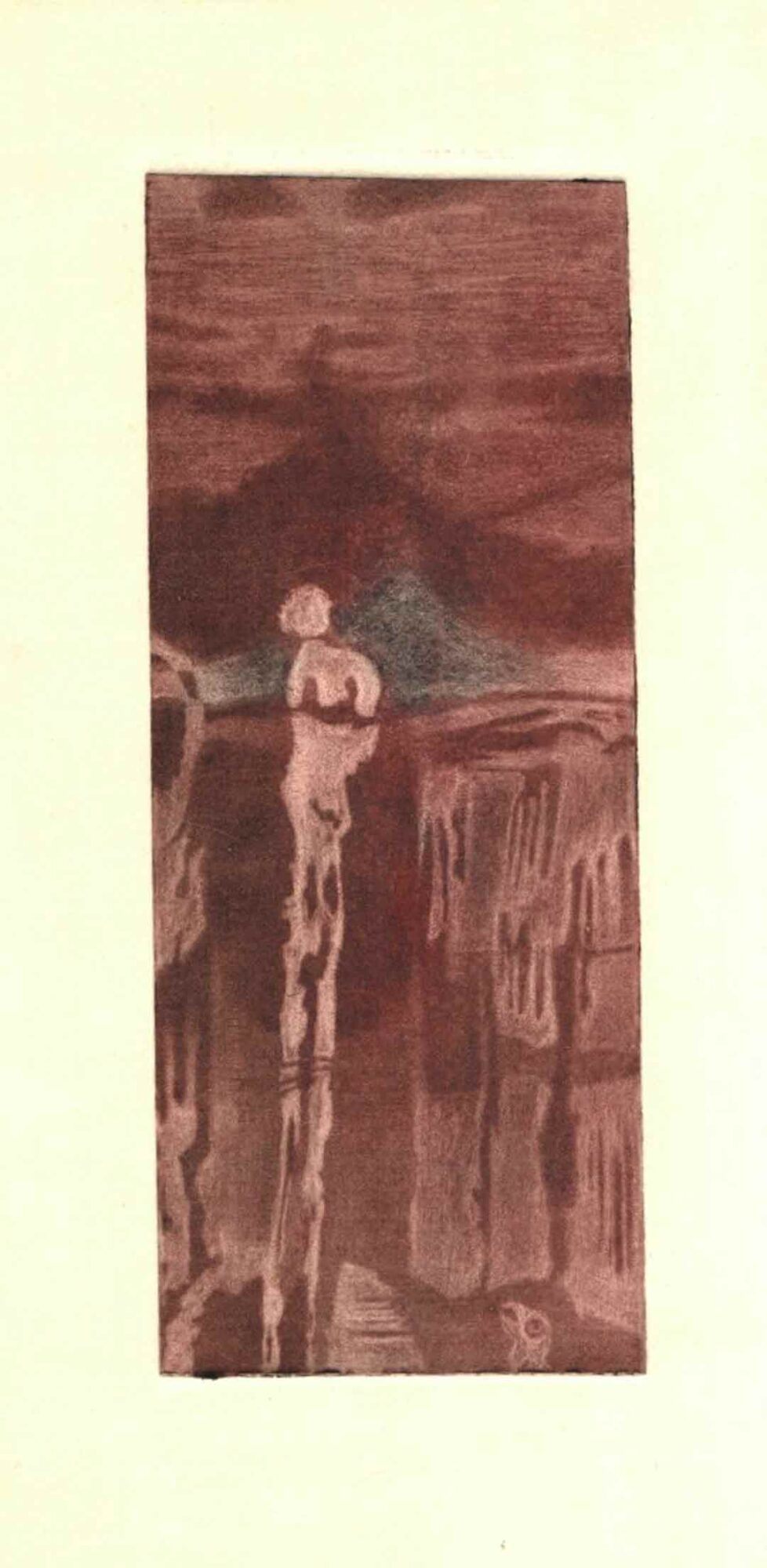
Etching allows for a wide variety of lines and details, as well as tonal effects depending on the duration of the acid exposure.