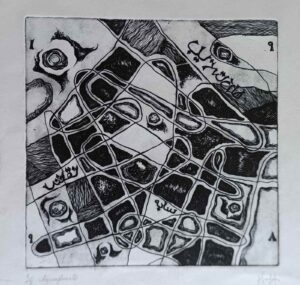
Collagraph
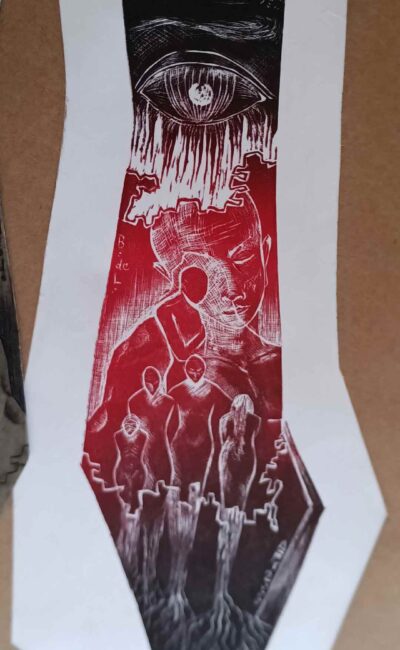
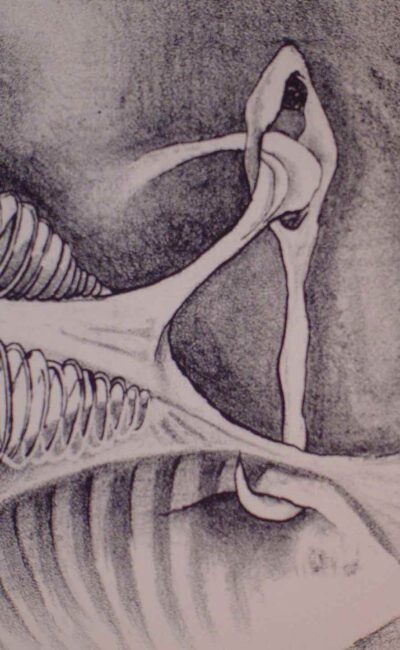
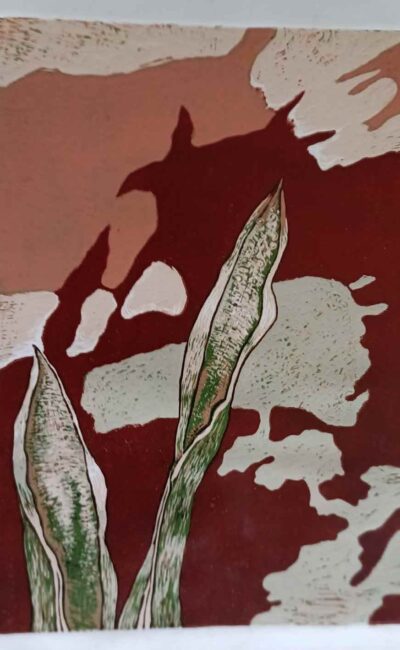
Printmaking is an artistic technique that involves drawing or carving an image onto a rigid surface, known as a matrix, and then transferring that image onto another surface, usually paper, through a printing process. It is one of the oldest forms of image reproduction.
Main characteristics of printmaking:
Matrix: can be made of metal (such as copper or zinc), wood, linoleum, stone, or even synthetic materials.
Inking: ink is applied to the worked matrix.
Printing: the image is transferred to paper by pressure, using a press or manually.
Multiplicity: allows for multiple copies of the same design, called prints or impressions.
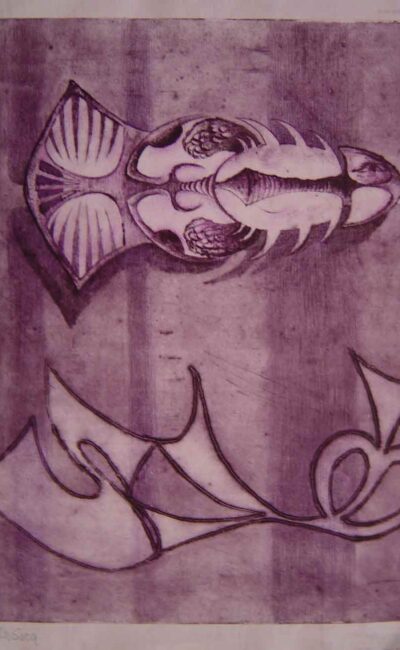
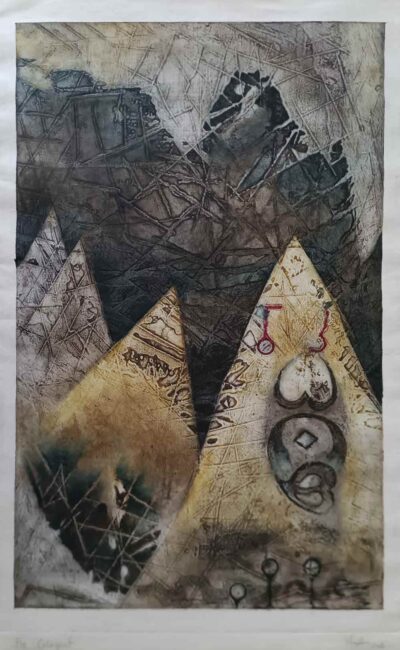
Collagraphy is a relief or intaglio printmaking technique that involves creating a printing plate by gluing various materials onto a rigid surface such as cardboard, wood, or acrylic. The term comes from “collage” and “graphy” (writing or printing).
In this technique, different elements—such as fabric, paper, threads, dried leaves, sand, or artificial textures—are adhered to build a textured image. Once the collage is dry and sealed, the plate is inked (either on the surface or in the recesses) and printed onto paper using a press.
It is a highly versatile and experimental technique that allows for rich texture and color exploration, and it is valued for its expressive, tactile, and unique qualities. Traditional engraving tools or toxic materials are not necessarily required, making it accessible and safe.